
More Gibraltar
It's not just fortifications. The Great Siege saw development in military technology that shaped the way we use artillery today.
This week I’m taking up from where I left off last week because there is more military history in Gibraltar than I can fit in one post. In this episode, a look at the defences to the south and a note on the advances in artillery technology in the Great Siege and beyond. And monkeys, because it’s the law.
The Southern Defences
While Britain was in control of Gibraltar, the main threat was always from the north, but when the Spanish first controlled the Rock, the threat was from the south. The Islamic conquest of Spain in the 8th century started with a landing at Gibraltar and once the Spaniards had driven the Muslims out, they built defences to the south to stop their return. The Charles V wall was built in 1540 and still stands.
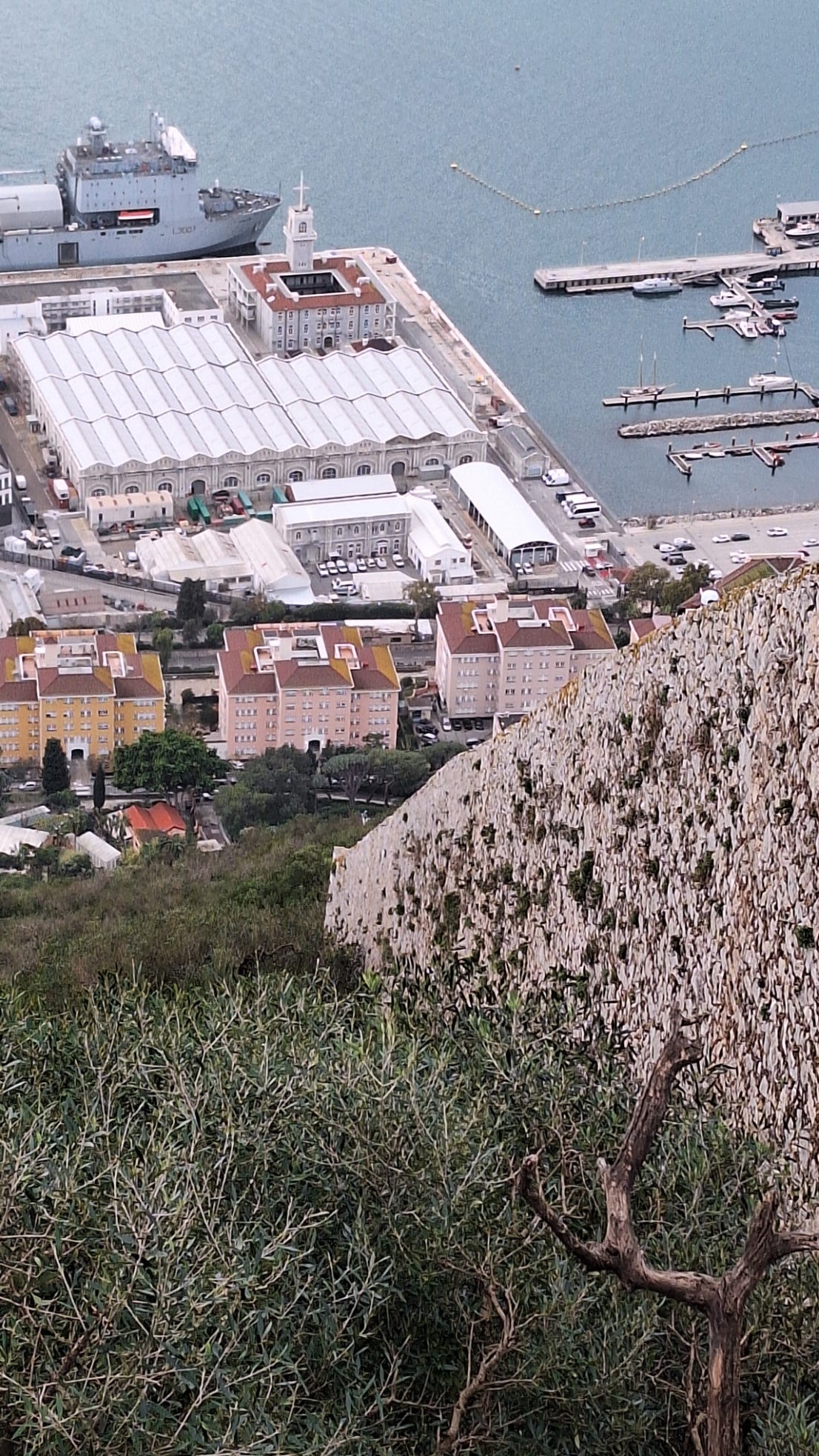
The wall zig-zags up the hillside so that each horizontal ‘step’ enables the defenders to give covering fire to defend against an enemy attacking the vertical stretch of wall below it. The photograph above was taken from one of the short horizontal stretches and shows how an archer situated there would be able to fire at anyone attacking the stretch of wall below him.
The wall itself is very narrow. Climbing it is basically climbing a flight of steps straight up the hill, with breaks at the horizontal bits.
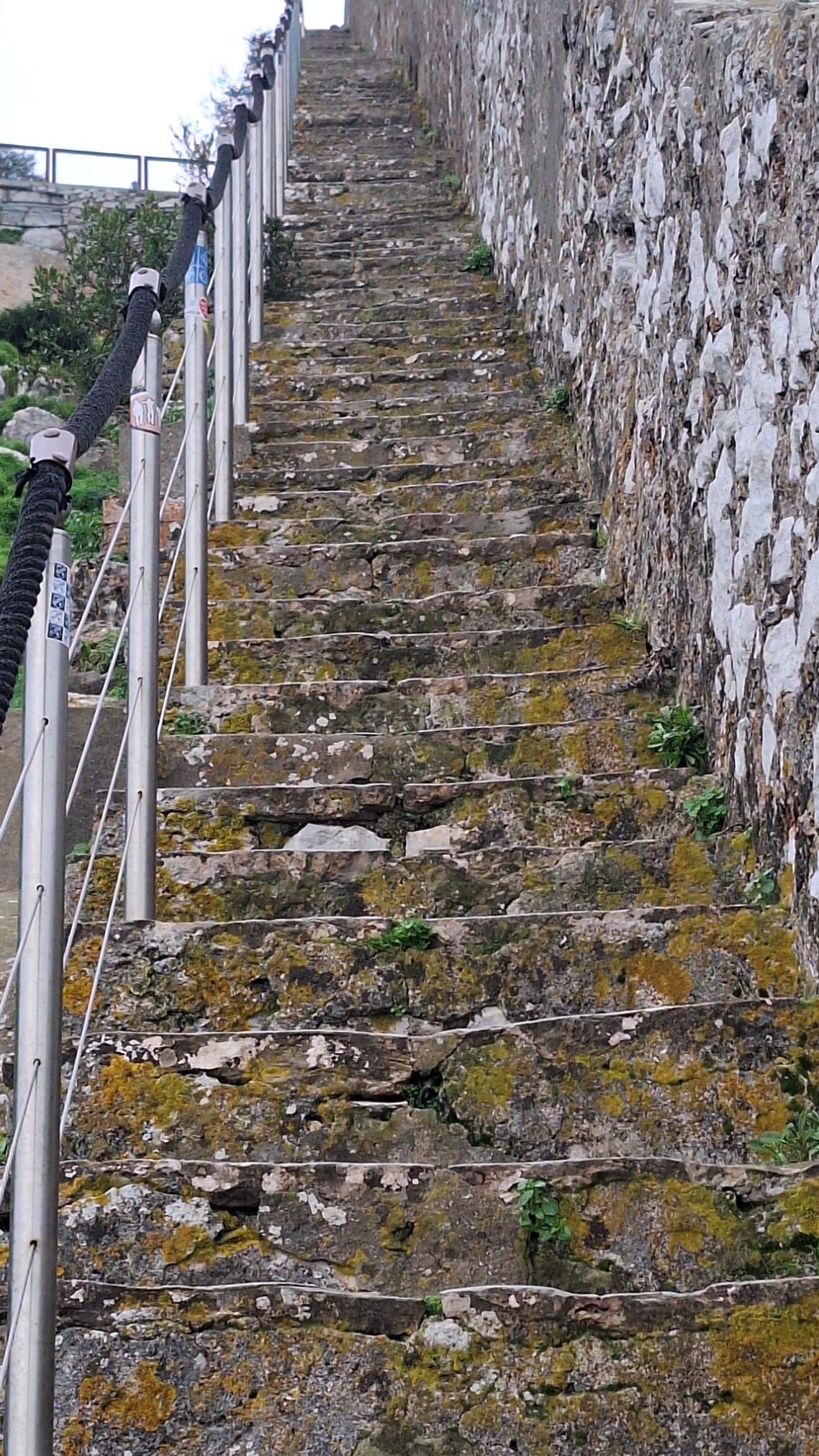
With such a thin wall, artillery would have it down in no time. It (together with the Tower of Homage and a similar zig-zag wall below it) is one of the few defensive structures that predates the widespread use of artillery in warfare. There were originally many tall round towers on the walls but these were replaced with shorter square gun positions as military ordnance developed.
The Charles V wall was of limited defensive value by the 17th century, but by then Gibraltar was no longer about fighting off small incursions by medieval warriors or, later, corsairs and the terrain that the wall defends doesn’t really favour the manoeuvring of the large organised bodies of infantry that you would need to assault Gibraltar by the 18th century.
Below the Charles V wall, the terrain is more manageable and a regular town wall was built there. The wall was pierced by the Southport gate.
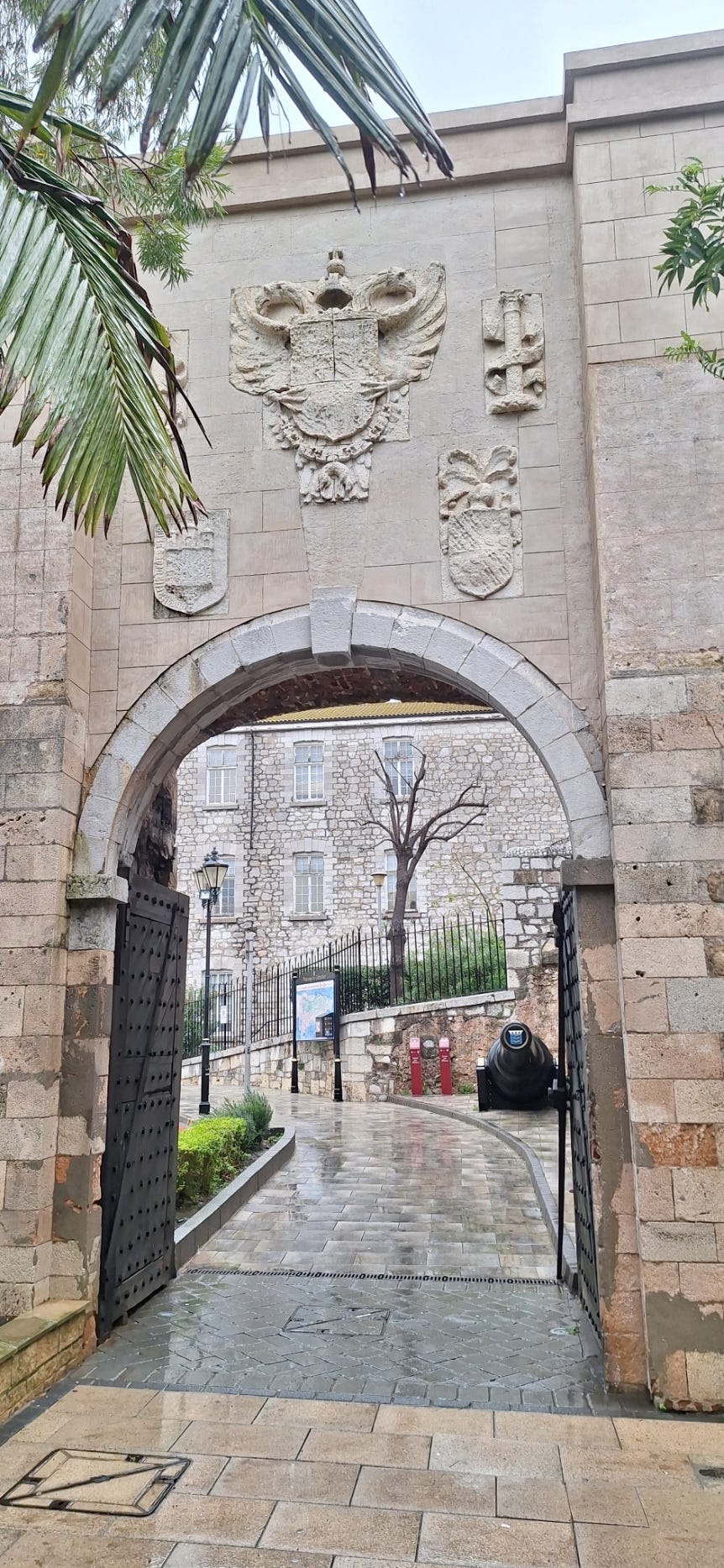
The picture above shows the original 1552 gate with the Royal Arms of Charles V between two columns representing the Pillars of Hercules with the arms of Gibraltar below (left) and those of the then Spanish governor. The gun you can see inside the gate was one of the modern rifled muzzle loaders that was mounted to defend the gate in the 1880s.
There was a ditch in front of the gate with a bridge across it. Most of the ditch was filled in. The nearby Trafalgar Cemetery is all that remains of it.
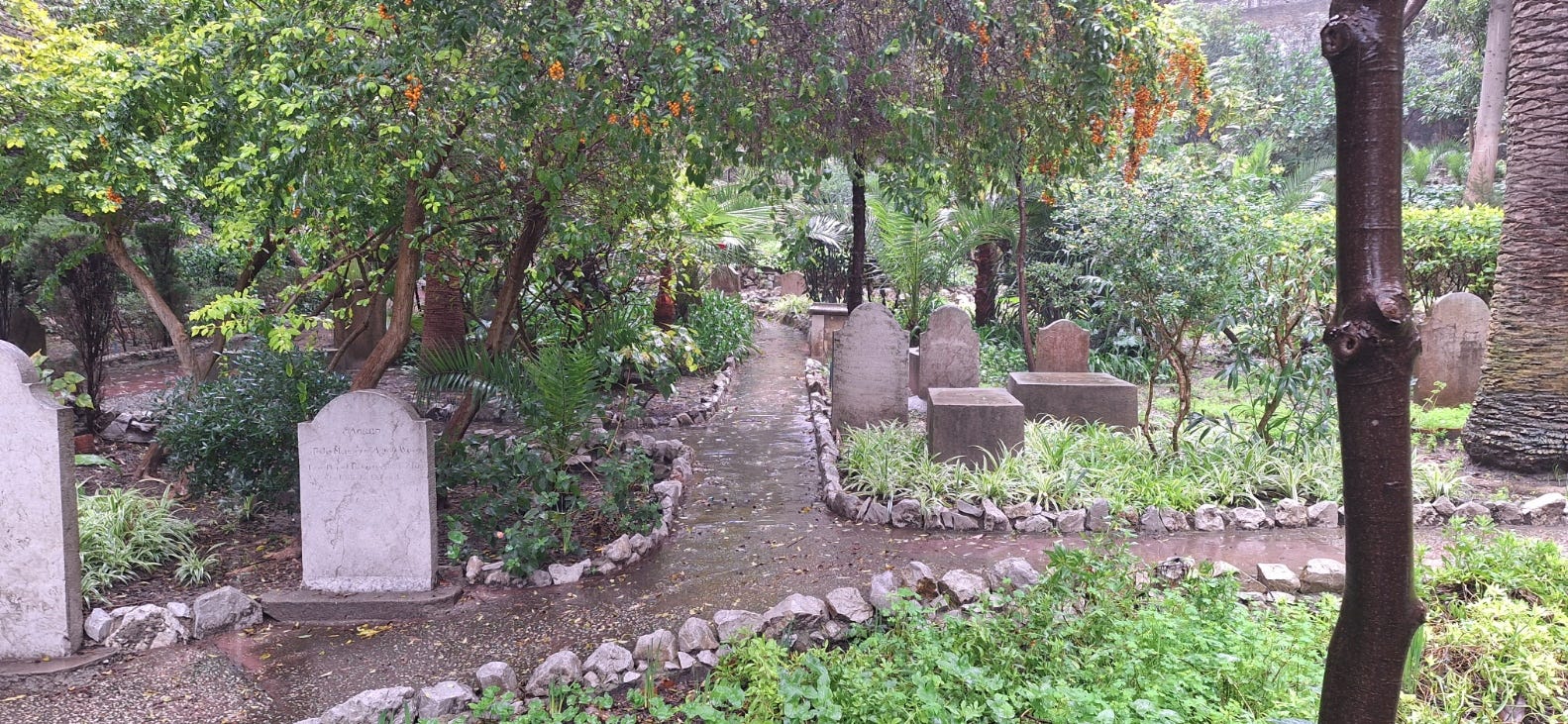
Incidentally, the Trafalgar Cemetery is named for the dead buried here after the battle of Trafalgar but this is, at best, misleading. Almost all of the dead were, as was the custom then, buried at sea. Two may be buried in the Trafalgar Cemetery, though the inscriptions on the tombstones are now illegible. Sailors wounded at Trafalgar and needing hospital treatment were left at Gibraltar and those who later died were buried at the hospital. Some of their tombstones were later moved to this cemetery.
The Southport gate is very narrow and a second gate was built alongside it to ease the flow of pedestrian traffic. This was constructed by British forces in 1883.
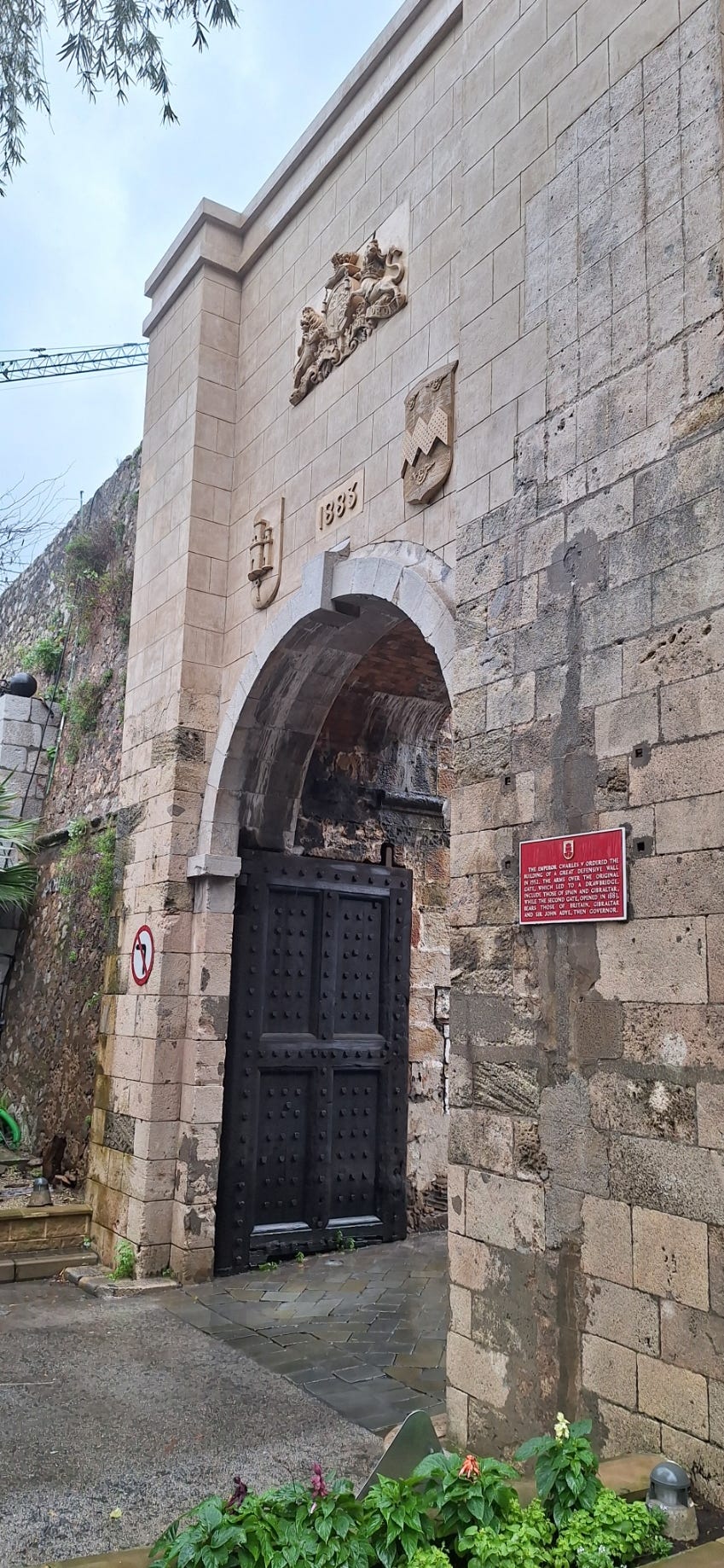
A much larger third gate was built to facilitate motor traffic in 1967.
The area around the gate is, as with every other strategic point in Gibraltar, surrounded by gun bastions. The photo below shows the 1540 South Bastion alongside the spectacularly ugly 1967 gate.
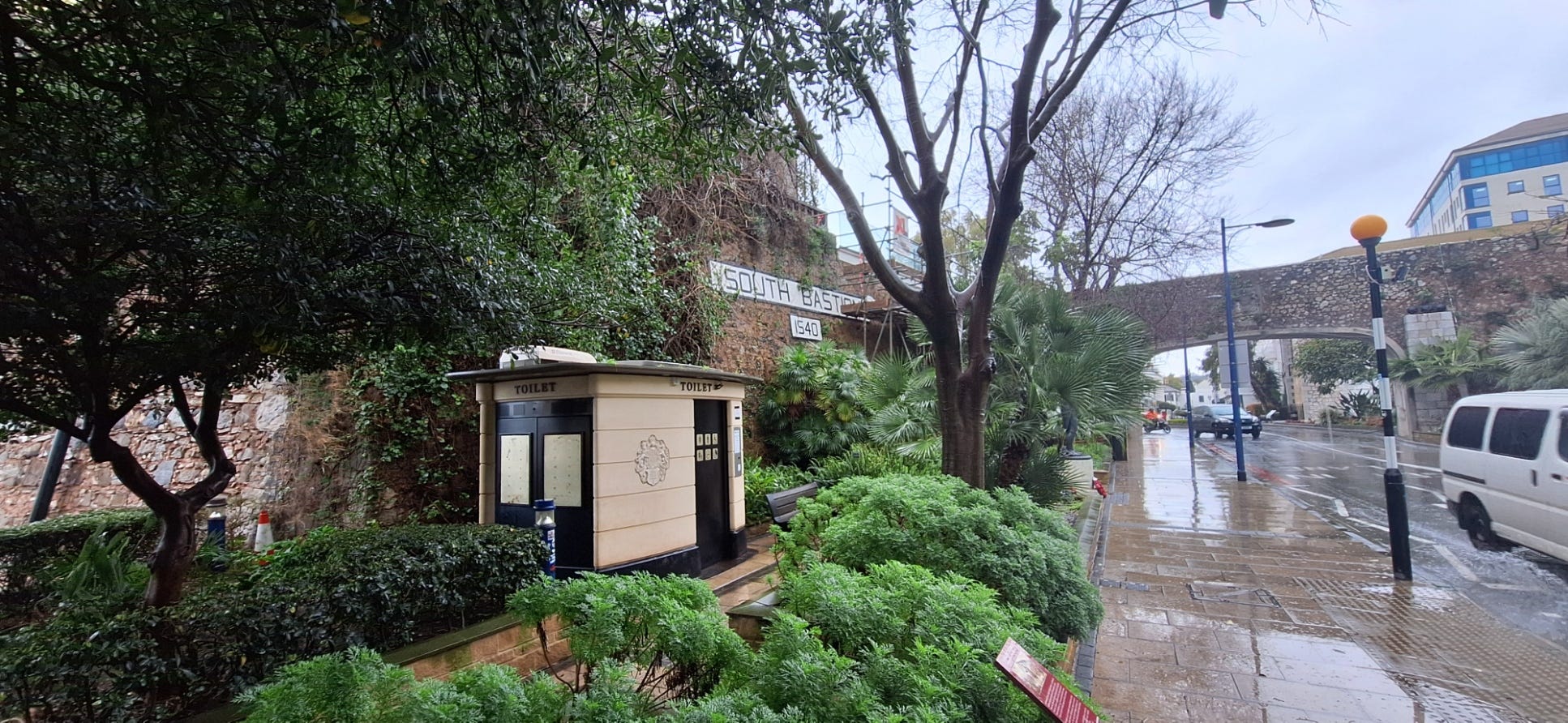
The east side of the Rock
Much of the east side of the Rock rises almost vertically from the sea. Nobody has ever taken the notion of attack from the east that seriously. They were nearly caught out in 1704, soon after the Anglo-Dutch force had seized the Rock in the War of the Spanish Succession. A Spanish goatherd led 500 Spanish troops up a path that was used to lead his beasts to the higher pastures.
The Anglo-Dutch force had held 300 troops as a mobile reserve to guard against any attack from the rear and they engaged the 500 attackers who had very limited amounts of ammunition as they could carry very little up the steep ascent. Most of the Spaniards died in the battle. Afterwards, the occupying troops blasted away the path to prevent any other attacks up the east cliff.
Heavy rocks were kept on the edge of the cliffs so that if people tried to climb directly up the Rock they might be crushed by stone levered over the edge above them.
During World War II there were gun emplacements on the East Rock so that the British could fire on enemy shipping in the Mediterranean. There was also concern that Gibraltar might be attacked from the sea by means other than large warships. The big guns were likely to be of limited use against landings involving fast motor boats and submarines (although one submarine was sunk by gunfire from the Rock during World War I). Bunkers and pill boxes were therefore built all around Gibraltar, but especially on the east side of the rock.
Artillery on Gibraltar
Shot and Shell
The Great Siege of Gibraltar (1779-1783) involved very little direct contact between the two armies. It was mainly decided by artillery and three and a half years of artillery duels led to some significant developments in the technology involved.
The British did bombard the Spanish siege lines with cannonball but these were not an effective way of stopping the Spanish developing their network of ditches and outworks that meant that their lines were edging towards the British defences. What was needed was munitions that destroyed people rather than buildings.
Explosive shells, called bombs, were effective against Spanish working parties. They were hollow iron balls filled with gunpowder and fitted with a fuse. The flash of the mortar when fired was enough to light the fuse and the shells were designed to explode just after landing so as to cause fires and injure anyone nearby. The mortars, though, were limited in range and the shells often fell short. Even when they landed near the Spanish working parties they were likely to sink into the soft, sandy ground so the explosion did little damage.
The British experimented with firing smaller shells from 24-pounder cannon and discovered that this gave them the range they needed to reach the Spanish lines. Experiments were made with different fuse lengths and eventually, according to John Drinkwater1, “These small shells … were dispatched with such precision, and the fuses were calculated to such exactness that the shell often burst over their heads and wounded them before they had time to get undercover ... Less powder was used and the enemy was more seriously molested.”
This was a novel technique and the lessons learned at Gibraltar were to revolutionise artillery warfare. When Henry Shrapnel visited Gibraltar after the siege, his observations of the effectiveness of these shells led him to design a shell that would explode into smaller, deadlier fragments and shrapnel now accounts for a high proportion of battlefield deaths.2
Developments in gunnery
As noted last week, the first battles at Gibraltar were fought with bows and arrows. As time went by, bows and arrows were replaced by cannon and, over the centuries, the cannon became larger and more sophisticated.
Mortars
Early mortars were very simple weapons. They were essentially just metal bowls (the name ‘mortar’ derives from the mortar used in kitchens and apothecaries’ workshops to grind things). You put gunpowder in your mortar, drop a ball on top of it, light the fuse and get out of the way. They are not very accurate but the ball arcs up into the air and can land behind enemy lines. They made sense in Gibraltar as their range benefitted from the fact that they could be mounted high on the rock.
When I say that they were simple and unsophisticated, I am not exaggerating. The photo shows a very basic mortar carved into the Rock.
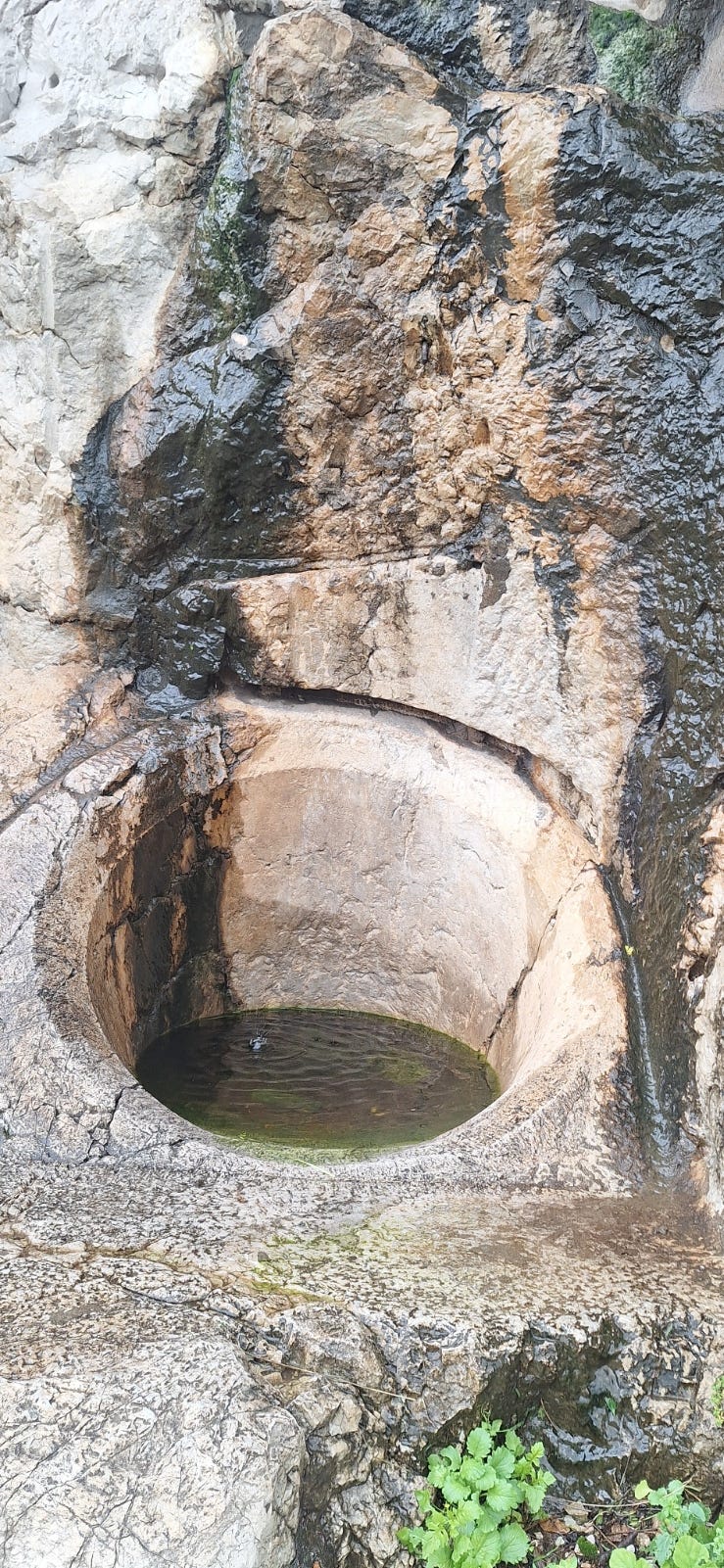
Healy’s Mortar predates the Great Siege. it was built in 1771 and designed to hurl stones weighing over a pound each (half a kilo or so). It proved unsuccessful as most stones fell inside the fortress rather than onto any attacking forces.
Cannon
The most common artillery in the Great Siege was muzzle-loaded cannon. These smooth bore weapons came in a variety of sizes, usually denominated by the weight of the ball that they fired. The cannon were mounted on wheeled carriages as they would roll back with the recoil of each shot. In fixed batteries the recoil was generally checked by ropes.
As the carriages were wheeled, they could be hauled up to their firing positions on the Rock. Engineers blasted track to the batteries and rings still attached to the rock alongside the tracks acted as pulleys for the ropes that the gun teams used to haul the guns hundred of feet up the cliffs.
Koehler’s Depressing Carriage
The high vantage points where the cannon were mounted provided many advantages but some were so many people high that the shot would pass right over the enemy without causing any damage. The solution was to point the guns downward. This created problems. The first was that if you load a ball into a cannon and the angle it downwards, the ball will just roll out of the barrel. This problem was relatively easily solved by pushing wadding into the barrel on top of the ball so as to hold it in place when the barrel was tilted downwards.
A more serious issue was that the recoil, instead of driving the cannon backwards, would force it up off the ground. This made it harder to secure by ropes and a cannon flying up into the air was a real danger to the crew gathered around it. The solution that was developed in the Great Siege was to have the gun itself (which, for a cannon means just the barrel) mounted on a wooden case that slid back (and hence up when the barrel was pointing downwards) with the recoil, rather than having the whole carriage recoil backwards.
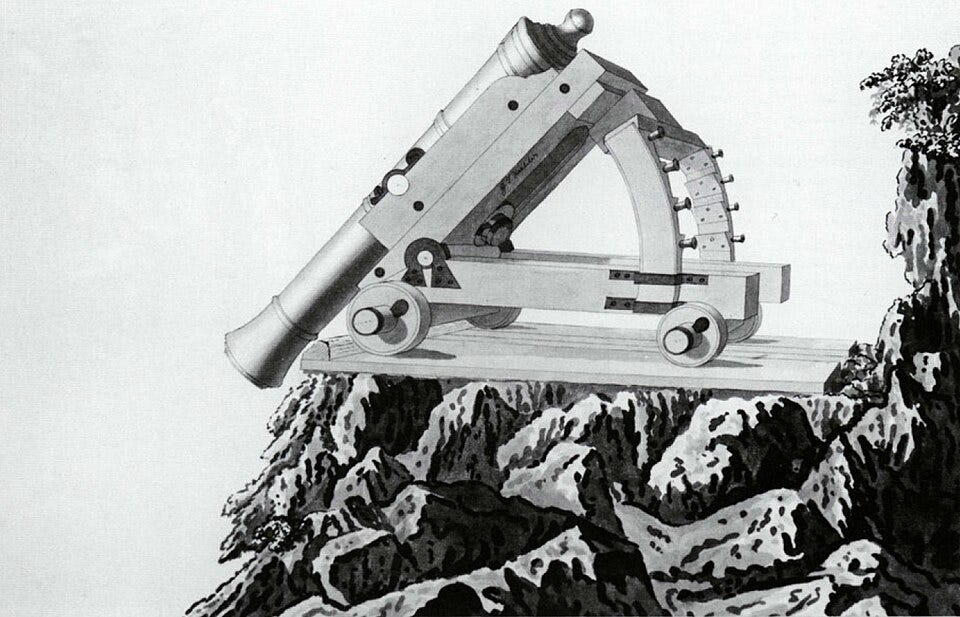
Most modern artillery pieces have the barrel move separately from the carriage on which it is mounted, so this innovation, developed during the Great Siege, has had an important influence on artillery through to today.
Rifled cannon
Most of the old cannons you see on the rock are smooth bore but by the late 19th century modern rifled cannon were being introduced. (You can see one from the 1880s in the photo of the Southport Gate, above.) These were muzzle loaded guns, very similar to the older cannon, but the barrel was rifled so that the ball was spun as it left the weapon, giving it greater range, accuracy and penetration.
The 100 ton gun
The 100 ton gun (which actually weighs slightly more than 100 tons) is mounted on the coast south west of the town pointing out across the straits. It is is the world's largest black powder cannon. It was installed in 1883.
The gun was made in response to guns of a similar size that were bought by the Italian navy. The British felt that they needed a gun as powerful as this in case the Italians tried to seize Malta which, back then, was claimed as part of Italy. The decision was taken that two similar guns should be installed in Gibraltar. Two were delivered but one was damaged under testing and the one that now sits on a specially made battery at Rosia Bay is the only one remaining.
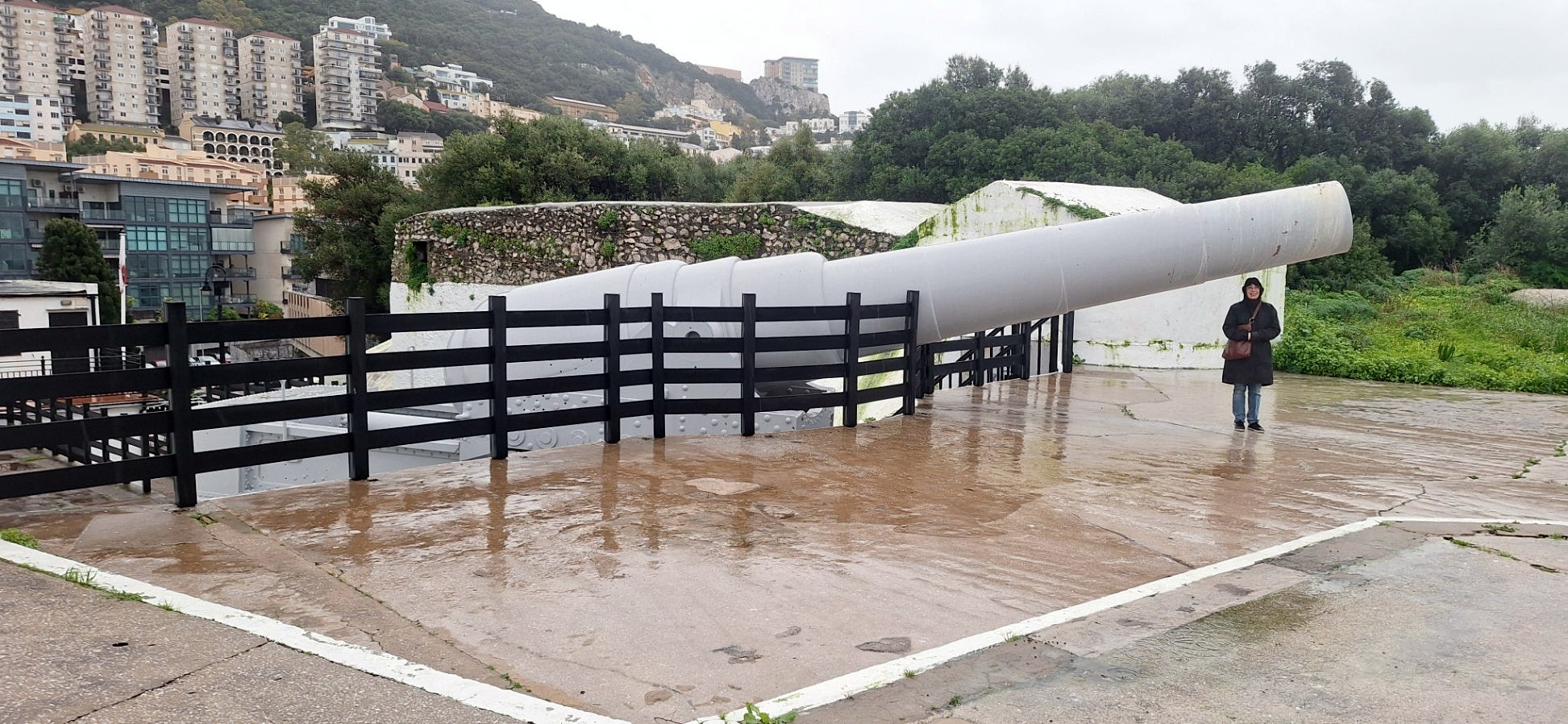
It was possible for a shell from the gun to travel six to eight miles but accuracy and penetration would be reduced at that distance, so the guns were effective to about four to five miles.
The gun was basically a muzzle-loaded rifled cannon so, in principle, the same thing as the one pictured next to the Southport gate but its size meant it incorporated some innovative technological advances. It was fired electrically. Instead of using flame, the charge was ignited by a wire, heated by an electric current.
The location of the gun and its range made it difficult to aim from the gun platform, so there was a spotter higher up who directed fire using one of the new-fangled telephones. It is possible that the first official telephonist in the British army worked in this unit — one of the 35-40 men needed to crew the gun.
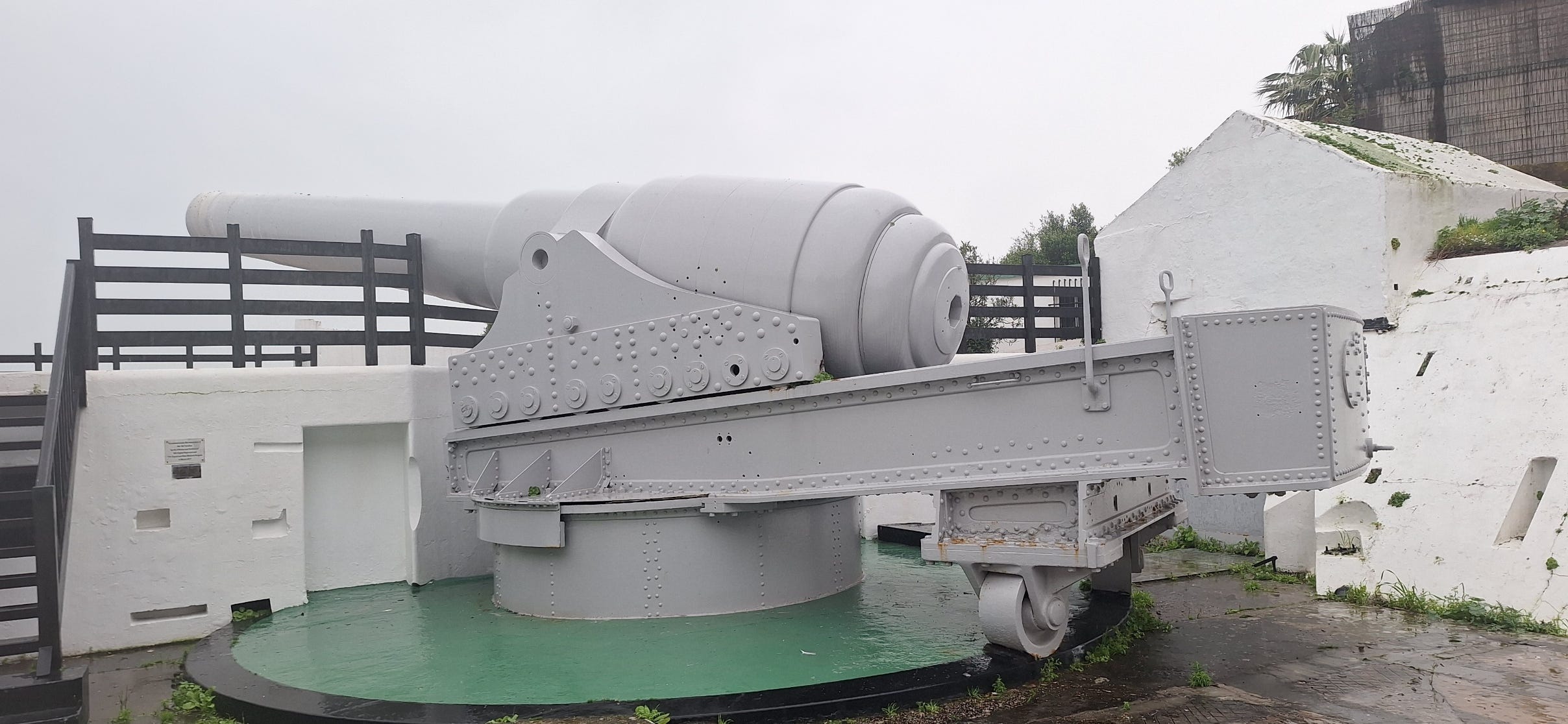
The gun could be swivelled as you can see in the picture above but its weight meant that it could not be moved manually. Steam power was used to both traverse and elevate it. Even the shells, each weighing a ton, were raised from an underground bunker by a steam hoist and loaded by machine.
The weapon, named ‘the Rockbuster’ was a technological marvel. It was never fired in anger.
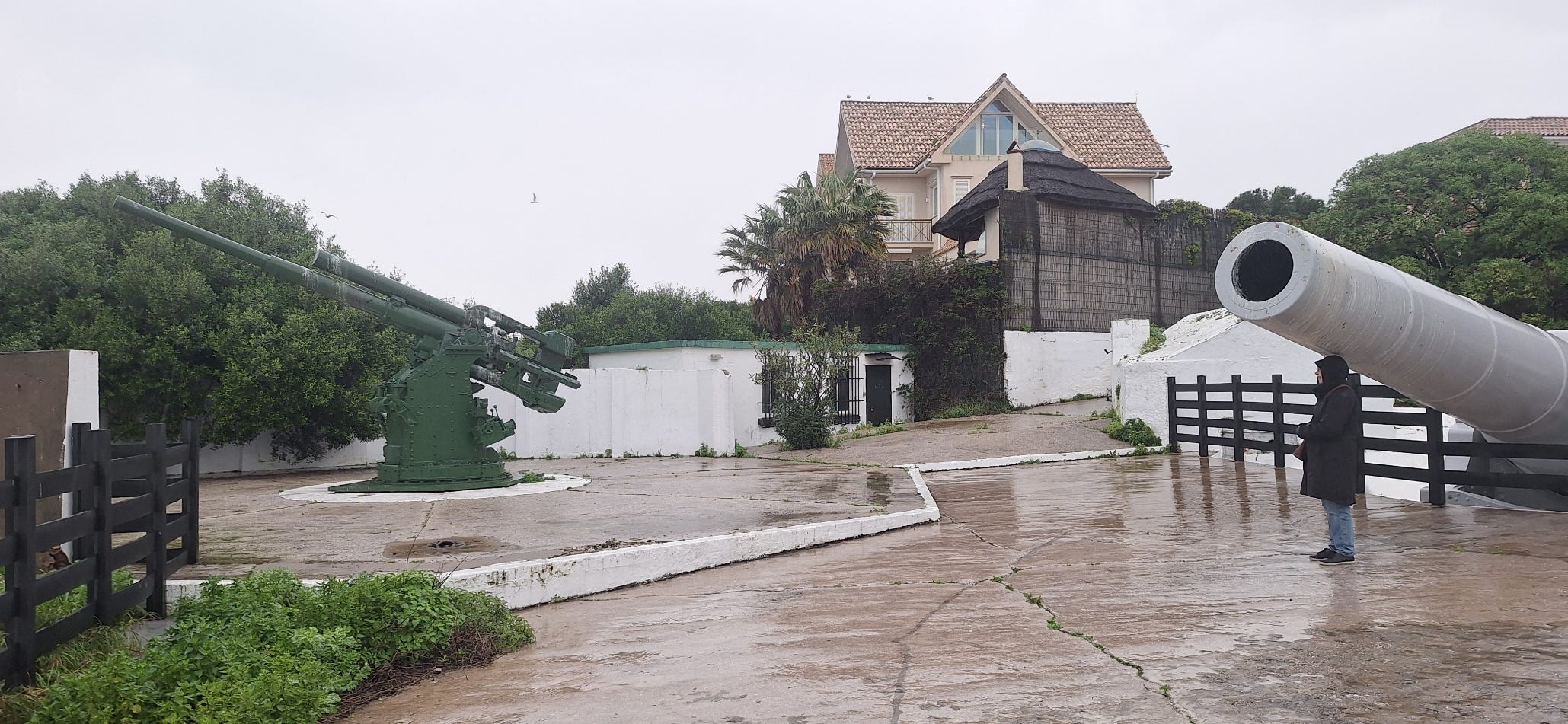
As with so many of Gibraltar’s defences, the 19th century platform was pressed into service for a later generation of firepower when an anti-aircraft gun was located on the battery for use in World War II.
World War II
Although the size and power of the weaponry on the rock continued to grow, the basic technology remained little changed until the late 19th century when breech loading guns began to replace barrel loaded weapons. Note that even in 1883, the 100 ton gun (above) was barrel loaded.
By World War II, though, the big breech-loaded weaponry would have been very unfamiliar to the gunners of the Great Siege. The 9.2 inch guns installed at the south of the rock could hit vessels along the African coast with 6 inch guns used for closer defence.
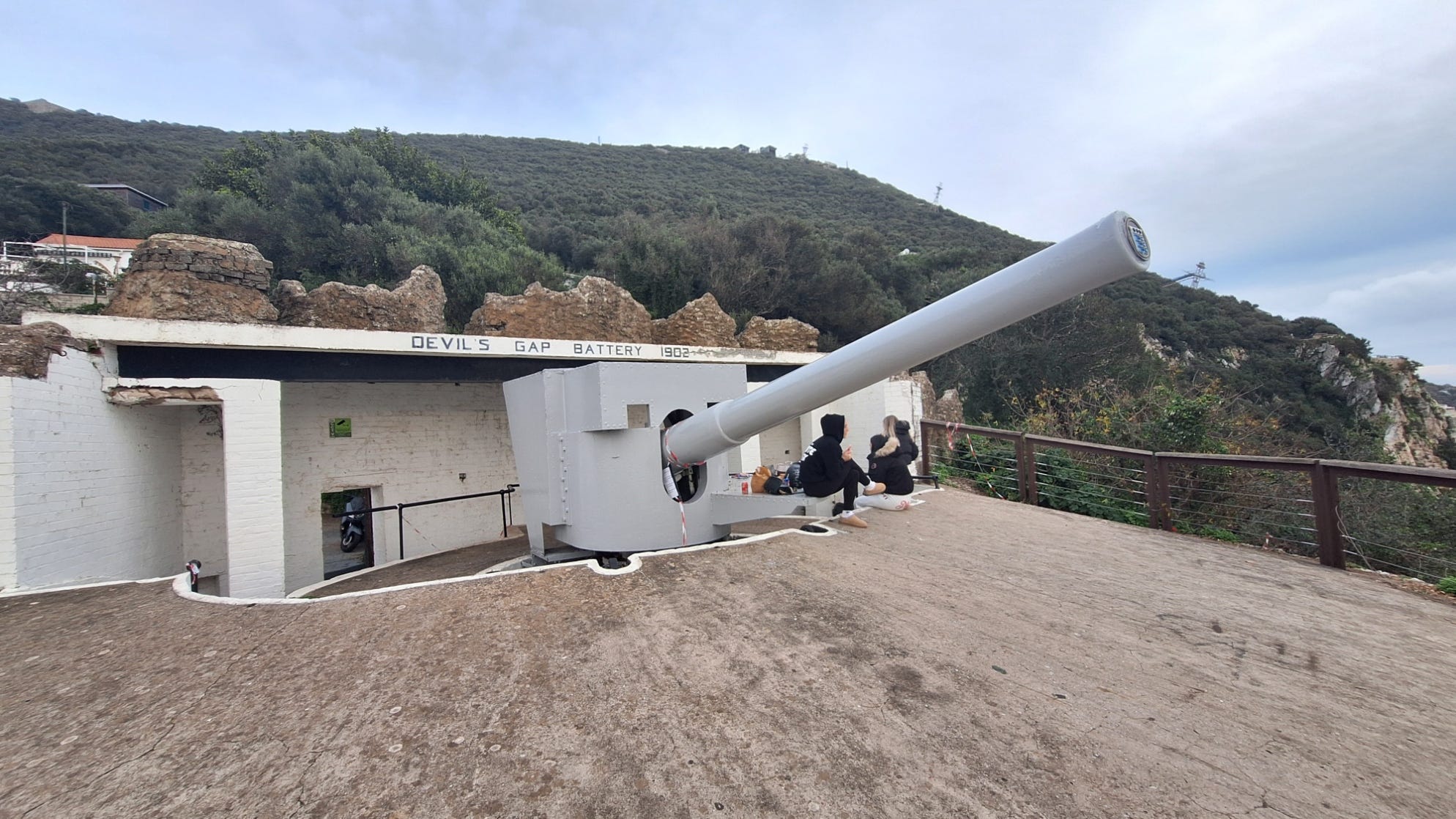
The Second World War also marked the first conflict in which Gibraltar was vulnerable to air assault and anti-aircraft guns were positioned all around the Rock, many on existing 19th century batteries. (You can see one in the photo of the 100 ton gun, above.)
Not just military history
I mainly write about history and wars, so that’s what I’ve concentrated on in Gibraltar, but it’s an amazing town and there is much more to it than just military history. A cave at the south end of the territory has produced a partial skeleton of a Neanderthal and evidence of the first (admittedly very crude) cave art. The vegetation is amazing: I’ve never seen such impressive cacti. The geology is worth more attention than we paid to it. (We never even got to see in the famous St Michael’s cave.) And, of course, there are the monkeys…
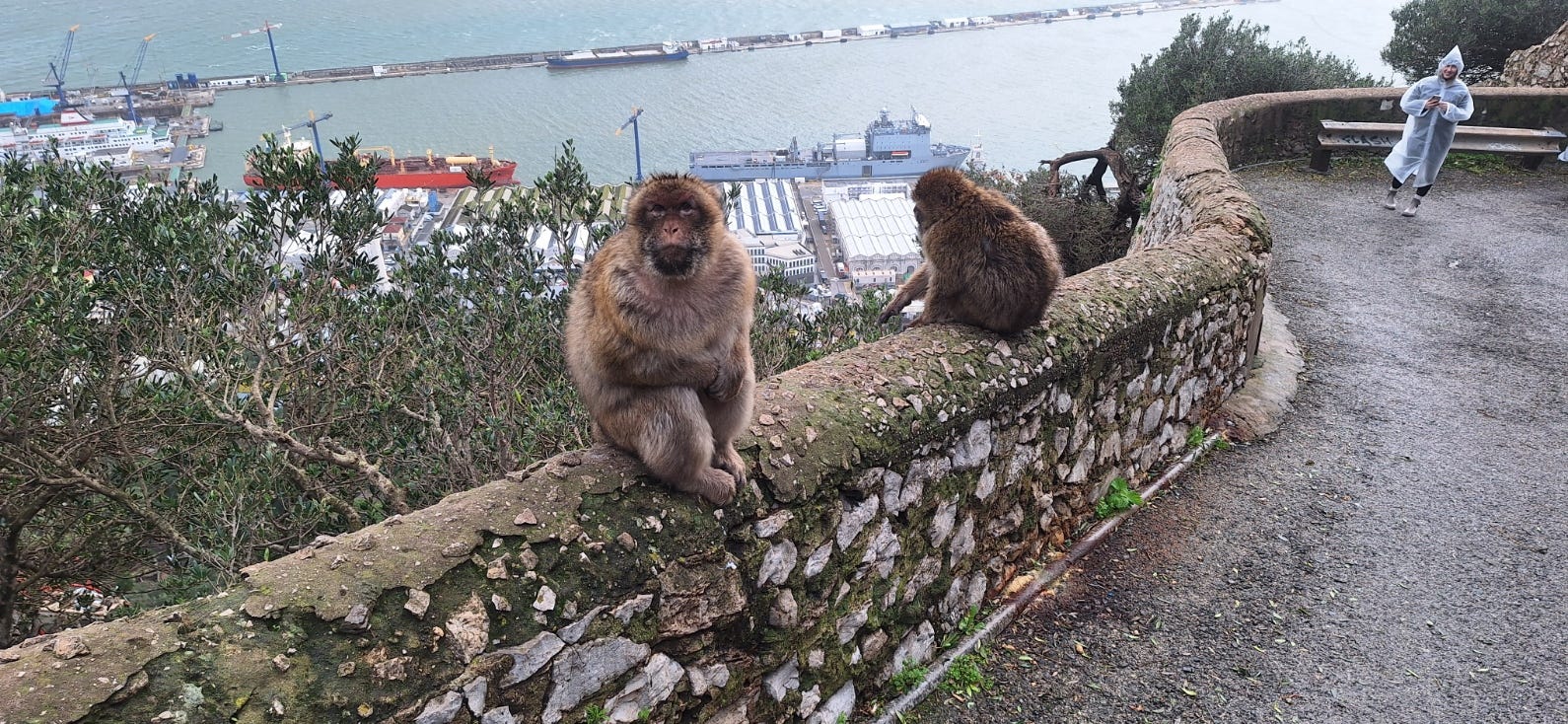
It was a brilliant few days away (even with the biggest storm in decades delaying our departure). I recommend it.
References/further reading
Roy and Lesley Adkins Gibraltar: the Greatest Siege in British History Little Brown 2018
Darren FA & Clive Finlayson The Fortifications of Gibraltar 1068 - 1945 Osprey 2006
John Ash RML 17.72in 100-Ton Gun Key Military https://www.keymilitary.com/article/rml-1772in-100-ton-gun
John Drinkwater was a young junior officer at Gibraltar who kept a detailed account of the siege. He is often quoted in Roy and Lesley Adkins’ book, Gibraltar: the Greatest Siege in British History
About 81 percent of Ukrainian battlefield injuries are shrapnel-related. (Giulia Bernacchi, writing in TheDefensePost: https://thedefensepost.com/2025/10/22/ukrainine-increasing-battlefield-injuries/)
Those monkeys look so fed up though!