
Marble Hill House
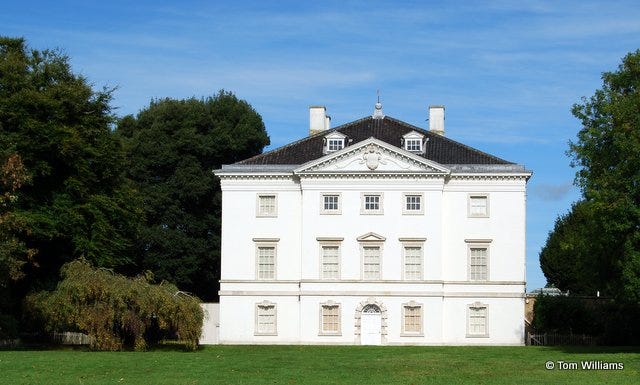
Marble Hill House re-opened at the end of March after its winter break and I’ve already got into the swing of showing off the house to visitors. It’s open free Wednesday to Sundays and I do recommend a visit.
I mention Marble Hill from time to time but I haven’t actually posted anything about it beyond notes saying I’ll be there and hoping readers might drop by. Today, I’m going to write a brief introduction to the place.
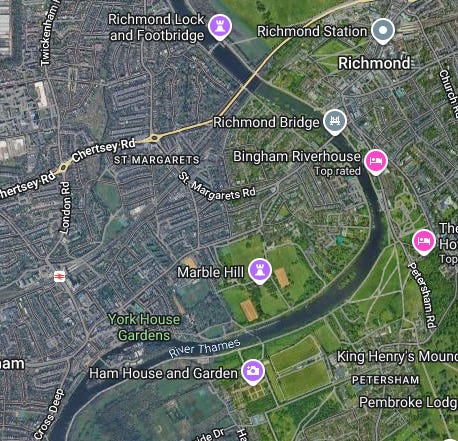
Marble Hill House sits by the river at Twickenham – a stretch known in the 18th century as ‘the Arcadian Thames’ where a string of great houses were built along the water highway from Westminster to Hampton Court. Most are now gone, but the wonderful Jacobean Ham House on the Surrey bank still faces Marble Hill and the one remaining wing of the once splendid Orleans House is a few hundred yards further along the river on the Middlesex side.
Marble Hill House was started in 1724. It was built for Henrietta Howard, the mistress of George II. She was no passing floozy, but a professional courtier who was a Woman of the Bedchamber to Queen Caroline and was highly regarded by many of those at court as a discreet and intelligent member of the innermost royal circle.
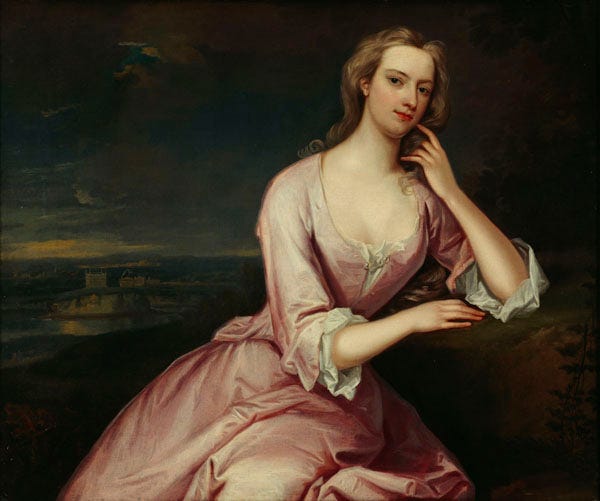
Although she had made a successful career as a courtier, she did not particularly enjoy the life and planned to retire to Marble Hill and live quietly there. For years she was intimately involved with the design of the house and gardens.
The building is small. She did not intend to keep a large household and wanted to live in a very different style from the splendours of the Georgian court. In any case, she was short of money and building work was frequently delayed while she raised funds.
The house was built in the Palladian style, which was just becoming fashionable. Although it is small, it is exquisitely proportioned.
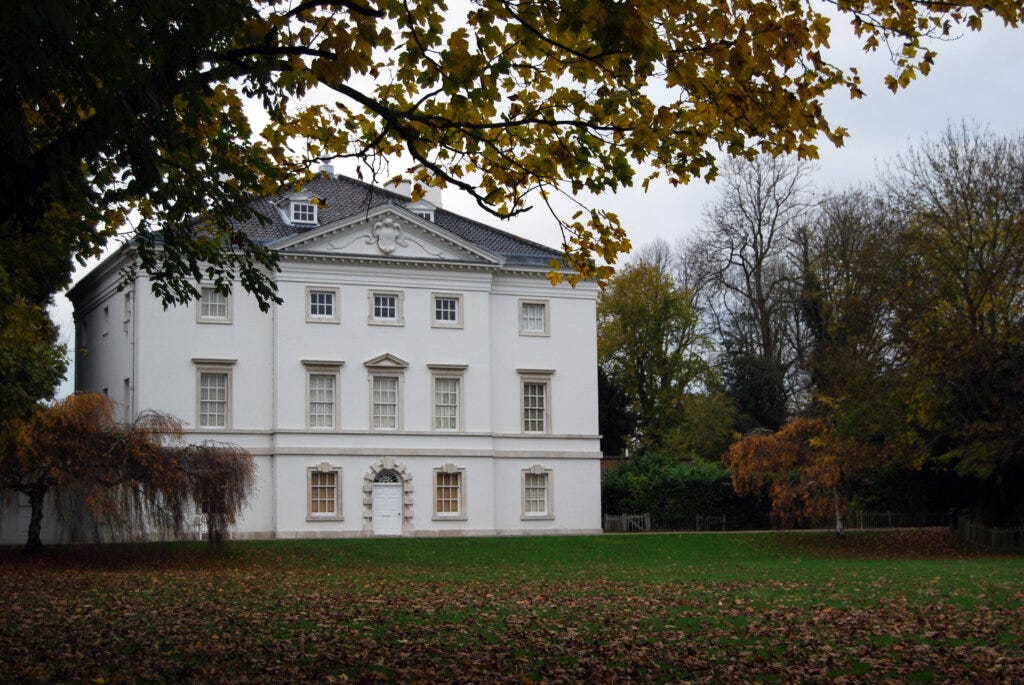
Building was completed in 1729 but Henrietta was not able to leave the court until 1734.
One factor that had kept her in the security of court life was her determination to avoid the attentions of her husband. She had married very young to a man who had abused and beaten her and she had sometimes had to rely on the king and queen to protect her from him. In 1733, though, he died and by 1735, free from both her husband and her royal lover, she married George Berkely, the youngest son of the Earl of Berkely and MP for Hedon in Yorkshire. She was too old to have children by then, but the couple were devoted to each other and she moved nieces and nephews into Marble Hill where they lived very happily as a family (albeit it one with a degree of coming and going among the younger family members).
George Berkely died in 1746 but Henrietta continued to live at Marble Hill until her own death in 1767. She had not only been involved in court and political life, but was the centre of an intellectual circle that included the playwright, Gay; the poet, Pope; and the novelist, Swift. Her private memoirs are regarded as one of the best guides to life in the early Georgian courts and the house at Marble Hill (the designing of which had been one of her main pleasures in her later years at court) still stands as one of the finest Palladian villas in England. (A quick Google search suggests several other contenders for this title but it is certainly a fine example.)
A grant from the National Lottery enabled a complete renovation of the building, which reopened in 2022 with the original interiors lovingly restored and decorated with period furniture and art works. Highlights include the Great Room, a perfect cube looking out over the Thames and an elegant dining room featuring hand-painted Chinese wallpaper. (You can see a short video I’ve made about the wallpaper HERE.)
Marble Hill House is on Richmond Road in Twickenham. The nearest Tube is Richmond with buses from outside the station directly to Marble Hill Park. St Margarets station (on the line from Waterloo) is less than ten minutes walk away.
Marble Hill House is an English Heritage property. It will be open on Bank Holiday Monday and I might even see you there.
Marble Hill House sounds delightful; another addition to my places to visit list next time I'm able to spend a few days in London.