
Fact and fiction
A historical tour of Southampton and a fabulous gothic story
A two for one post this week: a visit to Southampton, a town whose fantastic history is easily overlooked and a review of Essie Fox’s The Somnambulist.
Southampton
Last week I wrote about Buckler’s Hard, which is in the New Forest, not that far from Southampton. As my James Burke books are set in the Napoleonic Wars, a piece about one of the places where Britain’s ‘wooden walls’ were built is very on-brand. This week, I turn my attention to Southampton itself. Nearby Portsmouth was the home base of the navy during the wars with France. Southampton was less strategically important, but it has been a major port since the Norman Conquest, when Winchester was the English capital and people and goods moved through Southampton to and from Normandy. I’m going to offer a whistle-stop tour through the old town, taking a look at its history. My Substack offers history as one of its main themes. We’ll get back to vampires another week.
One damn thing after another
It’s a remarkable city. It has one of the best preserved city walls in the country and some significant Tudor buildings. It was the embarkation point for the Mayflower. (Plymouth was its last port of call but that was because the ship it was sailing in convoy with had to stop in Plymouth because it was in poor condition, so the Mayflower stopped there too.) In the Second World War, it was the birthplace of the Spitfire and a major embarkation port for D-Day. Post-war it was one of Europe’s main ports for ocean liners and its cargo port was one of the early adopters of containerisation. Over the centuries, though, the city has been buffeted by one disaster after another.
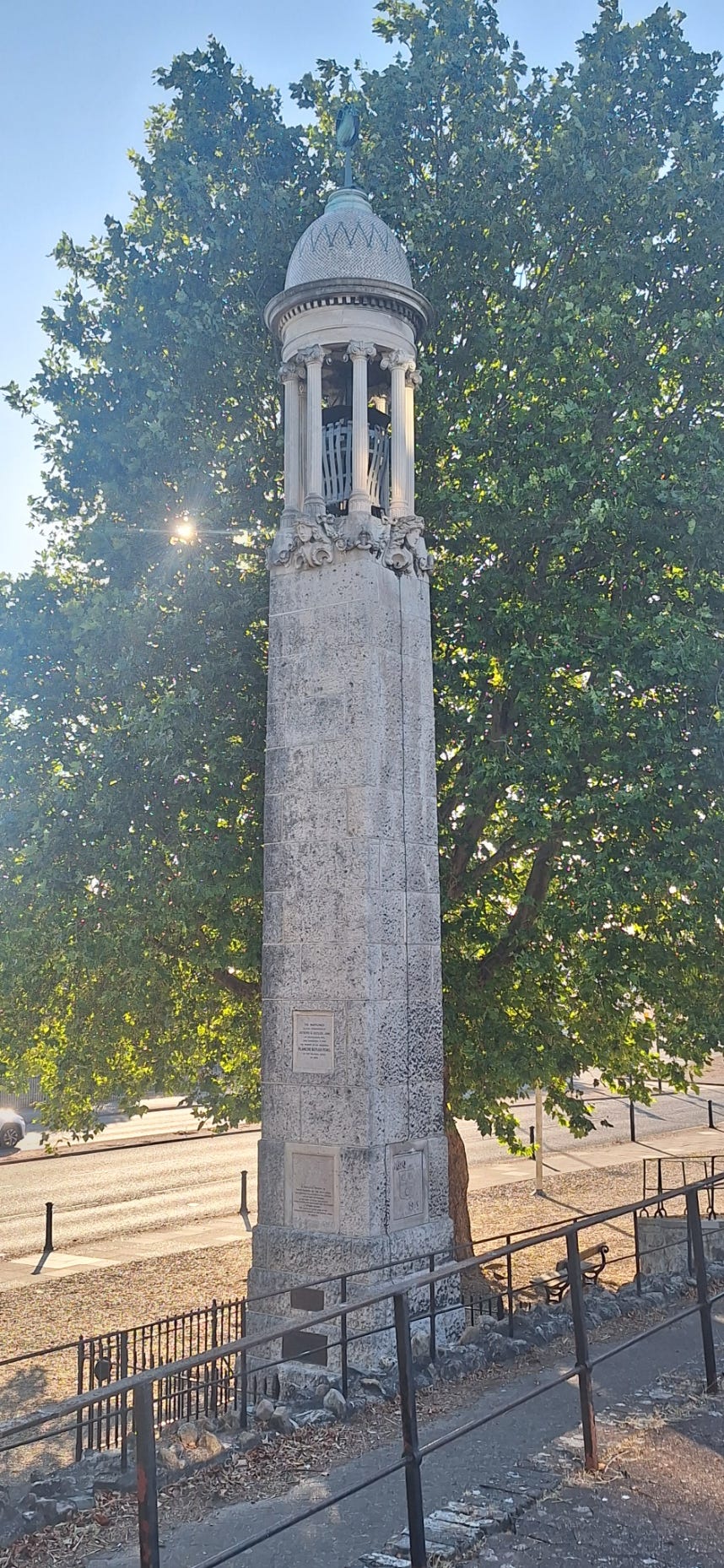
In 1338 the town was sacked by the French (the reason that those walls were originally built). Ten years later, it suffered horribly during the plague. The Titanic took most of its crew from Southampton. 497 men and women from the town died and the losses touched a very high proportion of households in the city, many of which lost their breadwinners. World War II saw massive damage by aerial bombardment. 630 people were killed and almost 2,000 were injured. Great swathes of the city were destroyed. Ocean liners gave way to aircraft as the principal way to cross the Atlantic. The grand Ocean Terminal, a combined railway station and terminal for passengers on the great ocean liners, opened in 1950, was closed just thirty years later and demolished in 1983. It continued to be an important cargo port, but the development of modern ports like Thames Gateway and the growth of Rotterdam as a European hub port has reduced the importance of Southampton and containerisation has reduced the need for dock labour, which used to be a major source of employment.
It is perhaps unsurprising that Southampton is looking to the future and turning its back on the past. In 2008, the city called itself ‘Southampton, International Maritime City’ but those signs have been scrapped as the city rebrands itself.

The city had great hopes of being chosen as UK City of Culture in 2025, but lost out to Bradford.
Old stuff. So much old stuff.
It’s a shame that the place doesn’t really celebrate its past. Just look at those walls. They’re special.
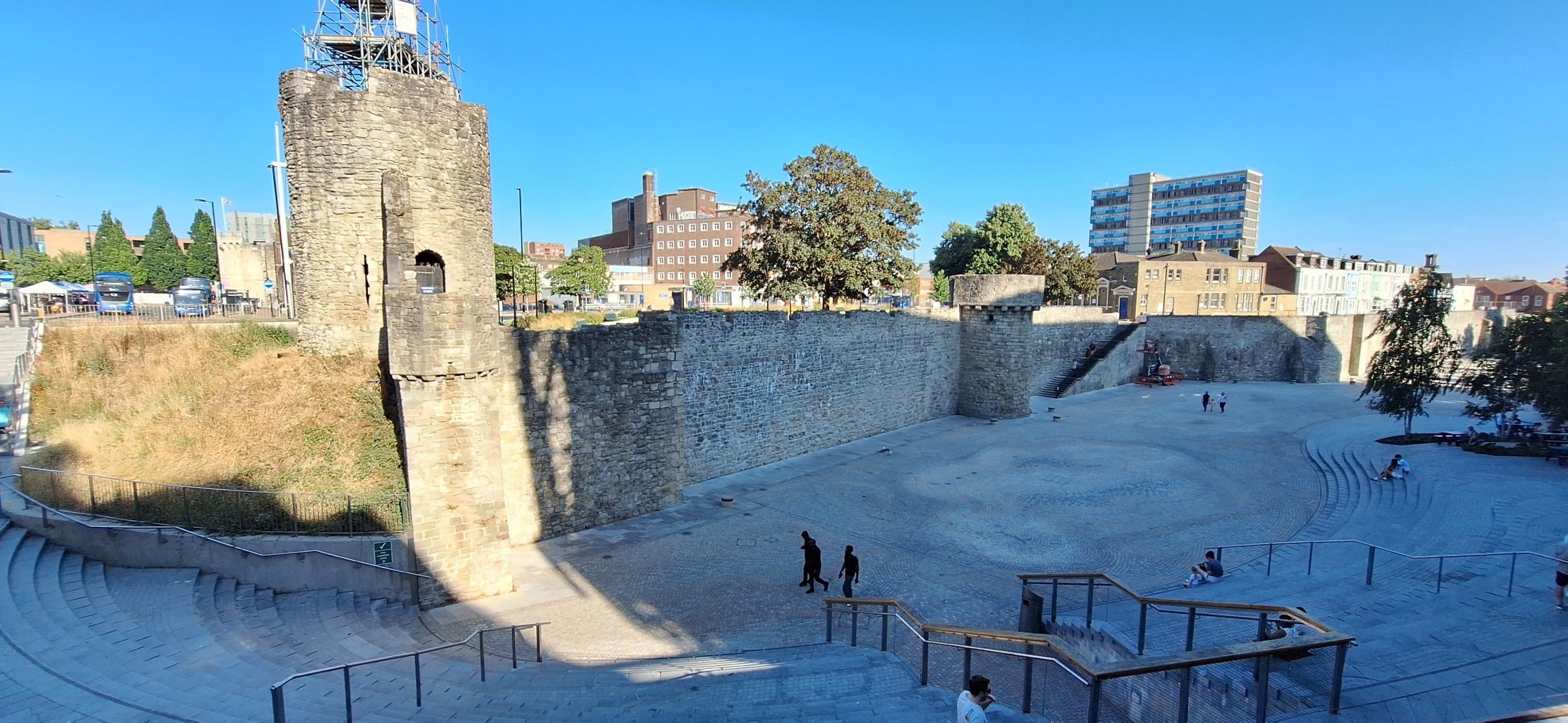
When they were built, the sea would have been almost up to the walls at high tide. Further along you can see where the warehouses that opened directly to the sea were sealed up to become part of the wall back in the 14th century. Because of the Isle of Wight just off the town, Southampton has double high tides. This means the water would lap the shore just outside those warehouses four times a day with levels close to high tide lasting for hours, an important consideration in the days when there were no docks. Ships back then were small and being able to unload and get to sea again on the same day was an important consideration.
The area enclosed by the walls is small: about 50 acres or around 1/12 of a square mile. Houses were packed tightly together so diseases spread quickly. Southampton may well be the port that the Black Death entered through in 1348. Around a quarter of the population is thought to have died.
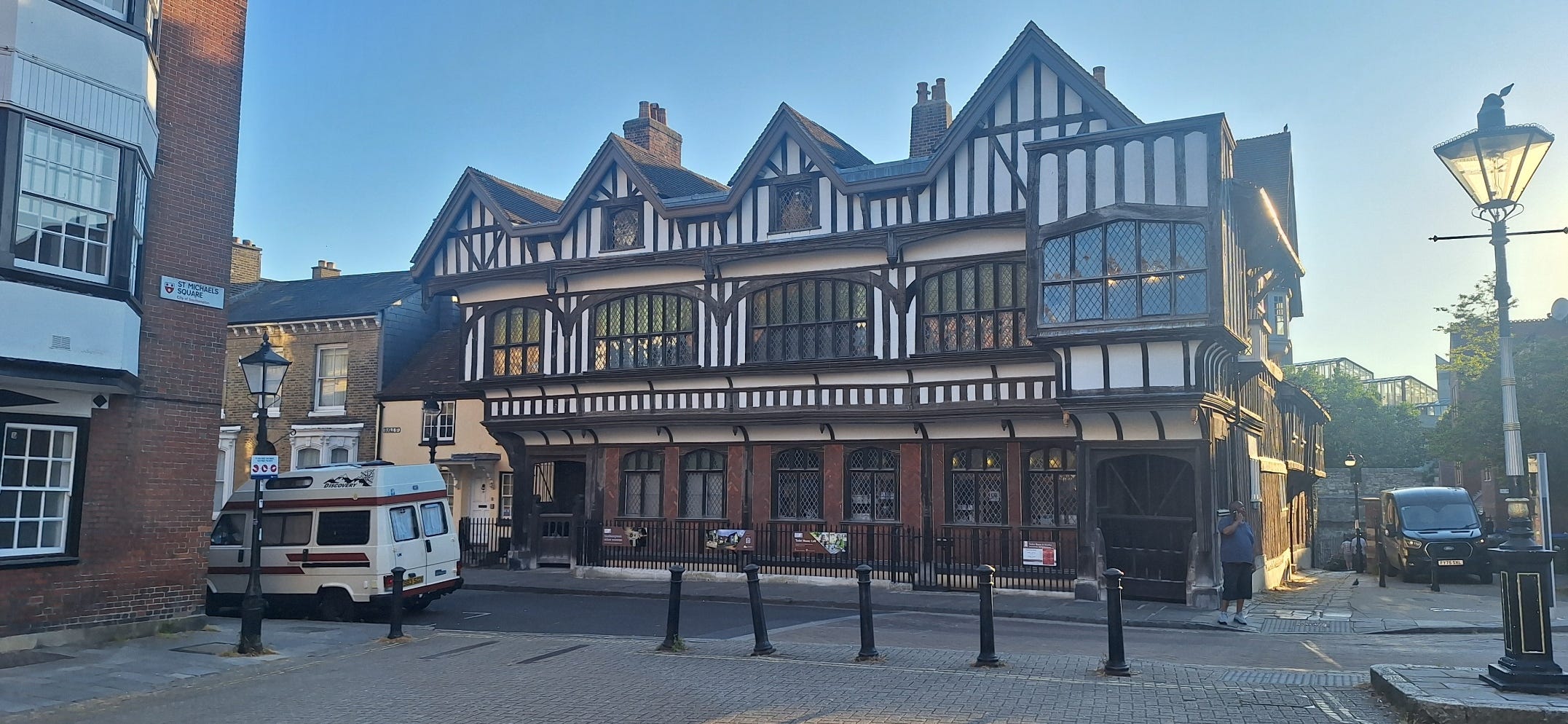
Despite this, there were people who did well as merchants in Tudor times, exporting wool and importing French wines. The Tudor House, built in the late 15th century, still stands. This was built as a house for one family. The size makes it obvious that there was serious money to be made.
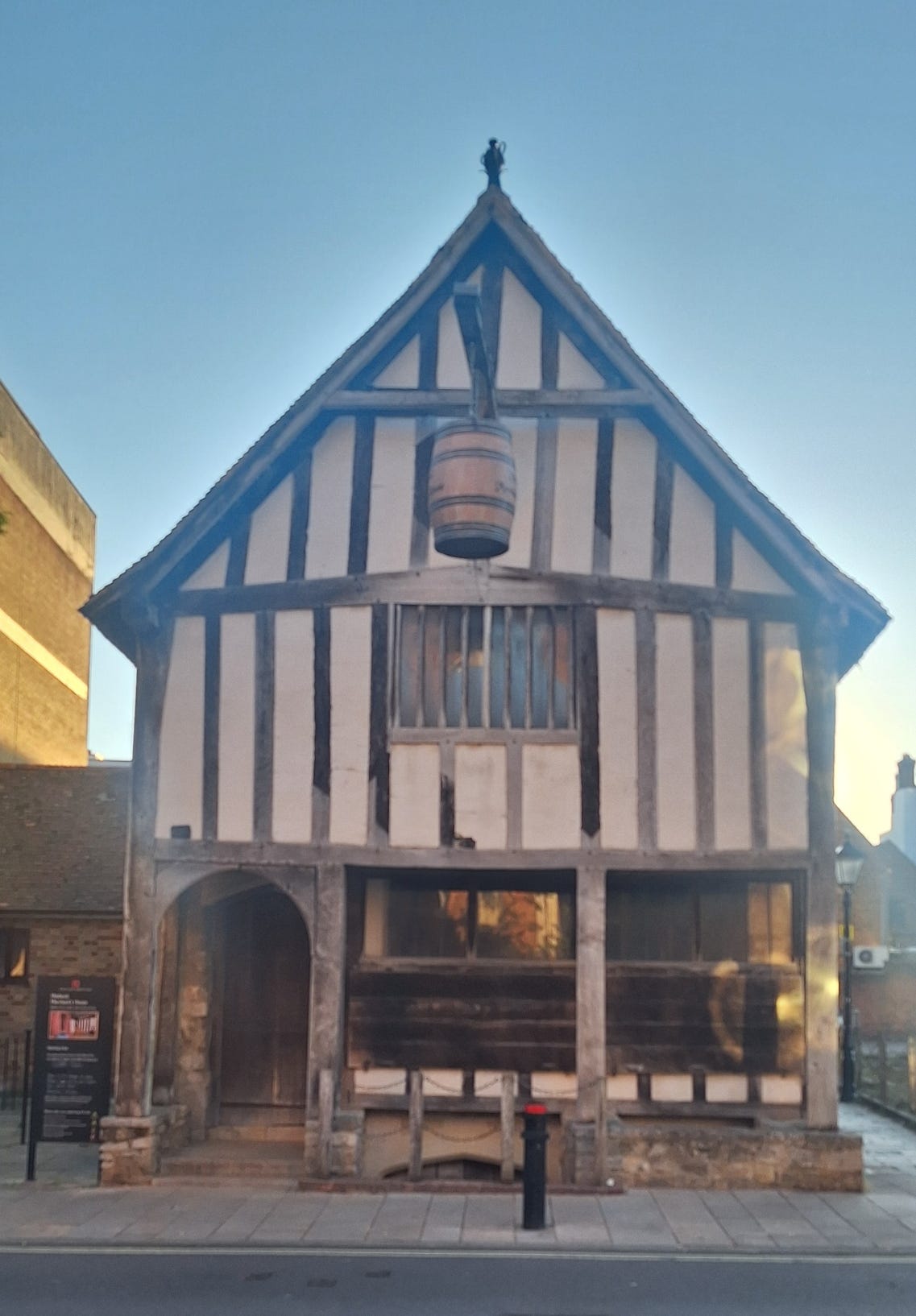
The Medieval Merchant's House was built even earlier, in the late-13th-century. German bomb damage in 1940 revealed the medieval interior of the house and it has since been restored to resemble its initial appearance. Unfortunately, it isn’t often open so I can’t take a closer look until my next visit to the town.
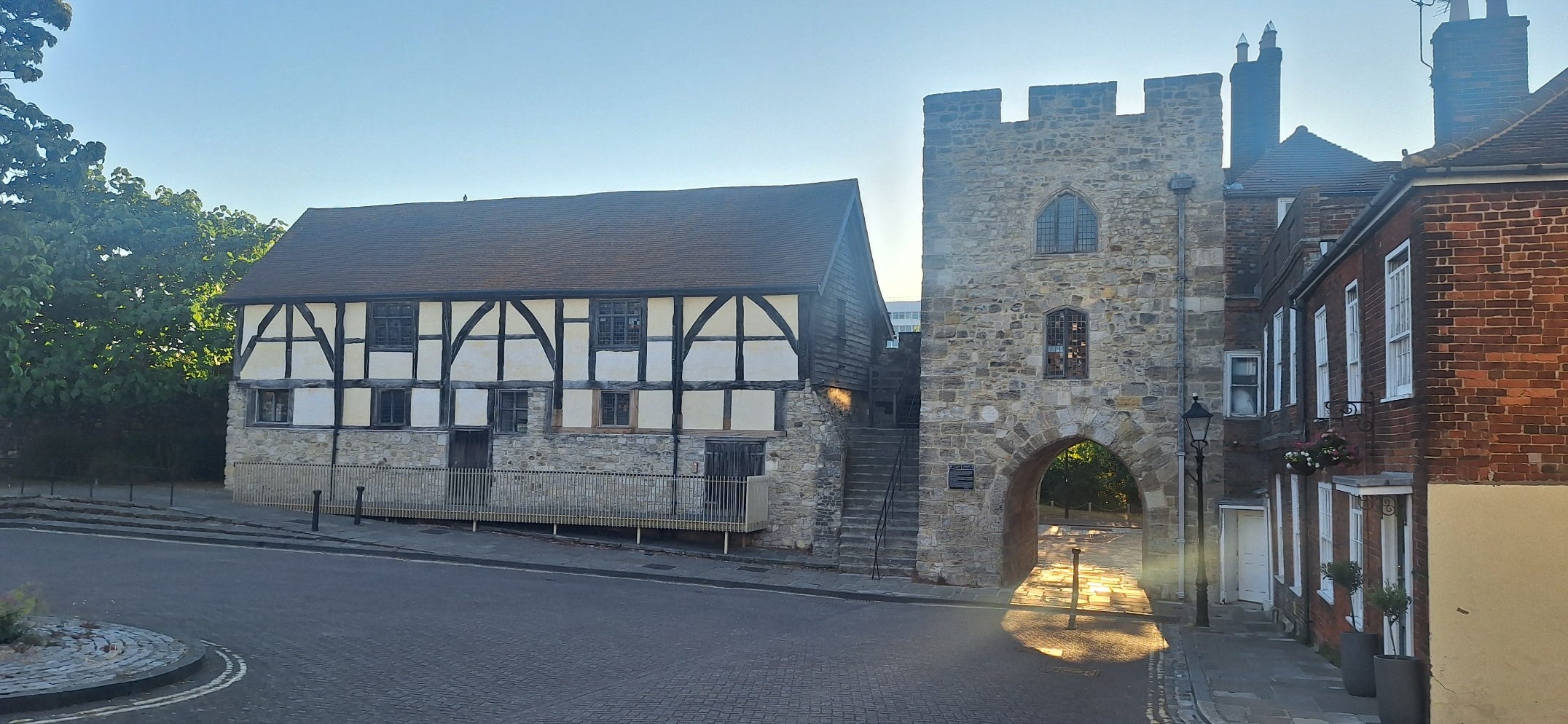
The amazing thing about Southampton is that between the areas that were bombed out in the 1940s and some not particularly well-designed new building in the 1980s you see so many old buildings somehow clinging on. Here’s the West Gate with the 15th century Westgate Hall alongside it.
The parish church (St Michael’s) was founded in 1070. There have been many changes to it over the centuries, with the 12th century rebuilding, 13th century chapels, a 15th century south aisle, the addition of a spire in the 18th century and renovation in the 19th century as the congregation grew with the town. Yet somewhere under all this, the base of the 11th century tower still stands.
The town is full of surprises, like the odd Dutch-style town houses where merchants from the Low Countries settled in the town in the 1500s and early 1600s. There’s far more to see than we got round while we were there.
I’d been to Southampton before and thought I knew the place but my son gifted me a guided tour and I learned so much more from our guide, historian PhD, Lily. I do recommend you consider using her or one of her colleagues. You can email them at info@travelusiontours.com or phone on 07584 021713.

Lately I’ve been reading
I don’t often do book reviews these days, but I recently finished The Somnambulist by Essie Fox. (Check out her Substack, ‘Talking the Gothic’.)

Essie Fox has a thing for the Gothic and in The Somnambulist she gives full rein to her enthusiasm for dark and stormy nights, mysterious figures in the mist, ancient homes slowly decaying, terrible family secrets, graveyards, and awful deaths. If you hate that sort of thing, you’d probably best give this one a miss. But if you have ever thought the odd bit of mid-Victorian darkness can be quite entertaining, then you are in for a treat.
… when a great flash of lightning masked every face with white, when thunder growled low in the distance, Mr Faulkner's mood began to change… Joseph ignored him, now striding ahead, leading us into the densest parts, where tall trunks of firs were like bars of a cage, where we might have been trapped in a dungeon, not even a glimpse of the heavens above and only dried pine needles crunching below. Something rustled and crashed through the thicket ahead…
It would be easy to slip into pastiche, but The Somnambulist never quite does. The characters are figures from a melodrama, but so well-drawn that you believe in them. The world they live in is detailed and somehow credible despite its fantastical country houses, its hidden caves and its mysterious, near-abandoned warehouses.
I was gripped and raced through the book. The novel itself reflects something of the period it writes about. It’s long (over 400 pages in paperback) and allows itself the time to breathe that Victorian novels had but which is less common these days. It’s an involved plots with complex relationships between the characters which need that space to develop.
I hate reviews that simply tell you that you have to read the book, but a detailed review is impossible because any discussion at all ends up revealing details that must spoil it for the reader. Some of the twists are so well-signalled that you wonder if they really count as twists at all. Others are so unexpected that I found myself re-reading passages thinking, ‘What on earth just happened!’ Some are straight out of the most implausible plots of Dickens and other Victorian writers, but they have always been forgiven their implausible coincidences and long-lost relatives, so why shouldn’t Essie Fox join in the fun?
In the end, all I can say is that I absolutely loved this book. You have to read it.
This is so kind of you Tom. Thank you!